
The Curriculum, In Full
What each week actually looks like
A transparent breakdown of the eight weeks, how lessons are delivered, and the simple materials the whole course is built around.

The Format
Short video lessons, printable movement guides, and nothing to track obsessively
Every week opens with a short video lesson demonstrating each movement from more than one angle, followed by a printable guide showing the same sequence as still images with brief notes. Some people prefer to learn by watching. Others prefer a page they can prop against the wall while they move. Both are included every week.
There are no leaderboards, no point totals, no comparison against other participants. Progress is tracked through a simple weekly journal prompt: how did the floor transfer feel this week compared to last, could you hold the balance position a little longer, did the chair squat feel steadier. Those honest, personal observations tend to matter more than any number would.
Week By Week
Eight weeks, each building on the one before it
Finding Your Base
Learning stance, breath, and the chair-assisted sit-to-stand pattern, plus the initial self-assessment.
Building Tolerance
Repeating the base movements with slightly higher volume so the pattern starts to feel automatic.
Introducing Balance
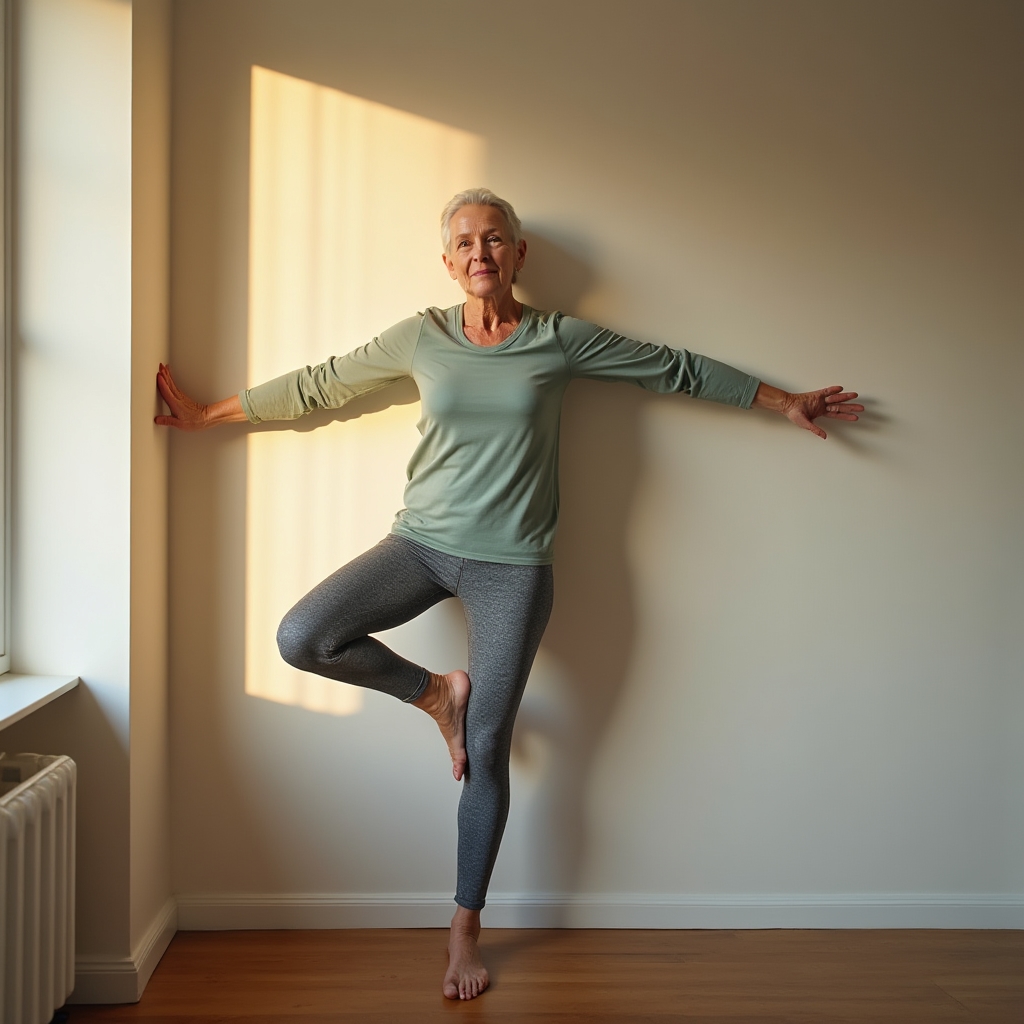
Single-leg holds using the wall as a light spotter, plus a first look at weight shifting drills.
Weight Shifting
Lateral movement patterns and simple stepping sequences that challenge balance in more directions.
Strength Under Load
Slower tempo squats and wall push variations that increase time under tension without adding equipment.
The Floor Work Begins
Early preparation drills for getting down to and up from the floor, broken into manageable stages.
Full Floor Transfers
Practicing the complete getting-up-without-hands pattern, with a chair positioned nearby for safety.
Integration Week
Combining strength, balance, and floor work into full sessions, with a closing self-assessment.
Balance, Woven Throughout
Balance is not a bonus module, it is part of every week from week three onward
Rather than isolating balance work into a single lesson, the course threads it through the second half of every session starting in week three. A single-leg hold might come right after a set of chair squats. A weight-shifting drill might close out a session that began with wall push variations.
This mirrors how balance actually gets challenged in daily life, in the middle of other movement rather than in a dedicated, isolated moment. It also means balance skill and strength develop on a similar timeline instead of one lagging far behind the other.
Materials At A Glance
Everything fits on a kitchen chair and an open wall
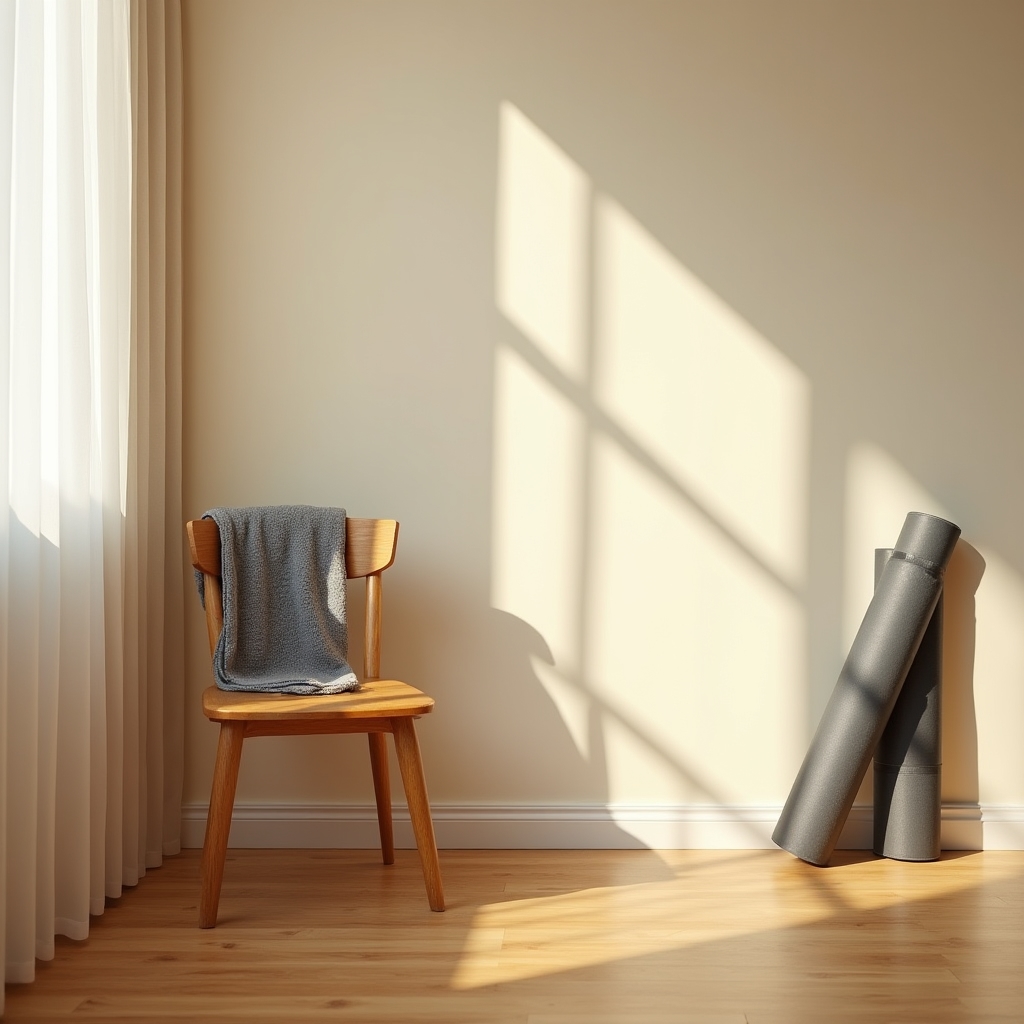
Beyond the chair and the wall, you will want a small stretch of floor space, roughly the size of a yoga mat, and clothing you can comfortably move in. Nothing else is required. Some people add a folded towel under the knees for the floor work, which is entirely optional and mentioned in the week six materials.
Each lesson notes an approximate time and any modifications for smaller spaces, so apartment living rooms work just as well as larger dens or basements.
A Note On Pacing
Eight weeks is a floor, not a deadline
Some weeks may need repeating before a movement feels settled, and that is a normal part of the process rather than a sign of falling behind. The course structure stays available so you can move through it at whatever pace your own week-to-week experience calls for.